
Mobile App Marketing for E-Commerce: A Strategic Framework
How to promote your shopping app and turn downloads into loyal customers.
The Mobile Commerce Imperative
Mobile commerce isn’t the future — it’s the present. Over 70% of e-commerce traffic now comes from mobile devices, and apps convert at 3x the rate of mobile websites.
Yet most e-commerce apps face a brutal reality: user retention averages just 26% after day one, dropping to 7% by day 30. The challenge isn’t just acquiring users — it’s keeping them.
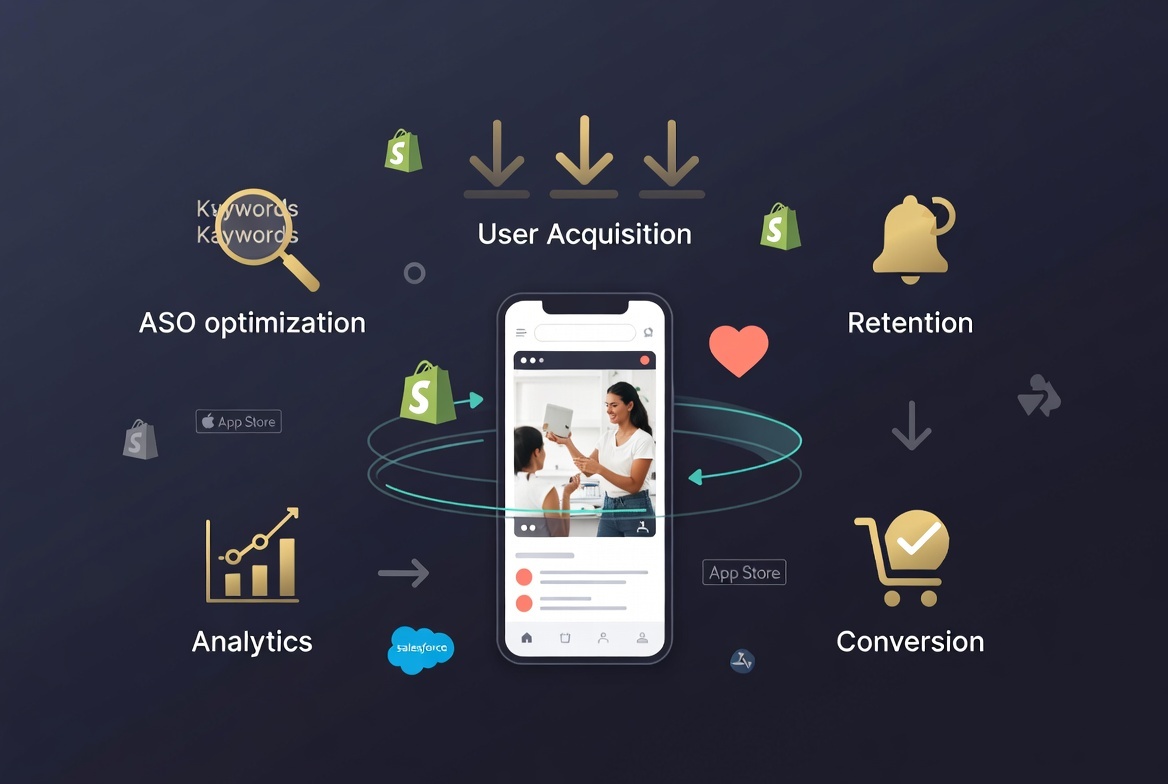
This guide presents a strategic framework for e-commerce app marketing that addresses both acquisition and retention across three critical stages: pre-launch, launch, and post-launch.
Stage 1: Pre-Launch Strategy
Audience Definition and Competitive Analysis
Before any promotion begins, establish clarity on two fundamentals:
Target User Profile:
- Demographics and shopping behaviors
- Pain points with current shopping experiences
- Channel preferences and app usage patterns
- Value drivers (price, convenience, experience, exclusivity)
Competitive Landscape:
- Direct competitors (other shopping apps in your category)
- Indirect competitors (where customers currently shop)
- Feature gaps and positioning opportunities
- Marketing channels and messaging strategies
This analysis informs every subsequent marketing decision.
App Store Optimization (ASO)
With millions of apps competing for attention, your app store listing functions as a conversion-optimized landing page.
Title and Keywords: Include category-relevant keywords alongside your brand name. “StyleBox – Women’s Fashion & Deals” outperforms “StyleBox” alone in search visibility.
Visual Assets:
- Screenshots demonstrating key features and benefits
- Video preview showing the shopping experience
- Icon that’s distinctive and category-appropriate
Description Strategy: Front-load value propositions in the first two lines (visible without expanding). Include secondary keywords naturally throughout.
Localization: For international markets, translate and culturally adapt listings — not just text, but visual elements and value propositions.
Pre-Launch Audience Building
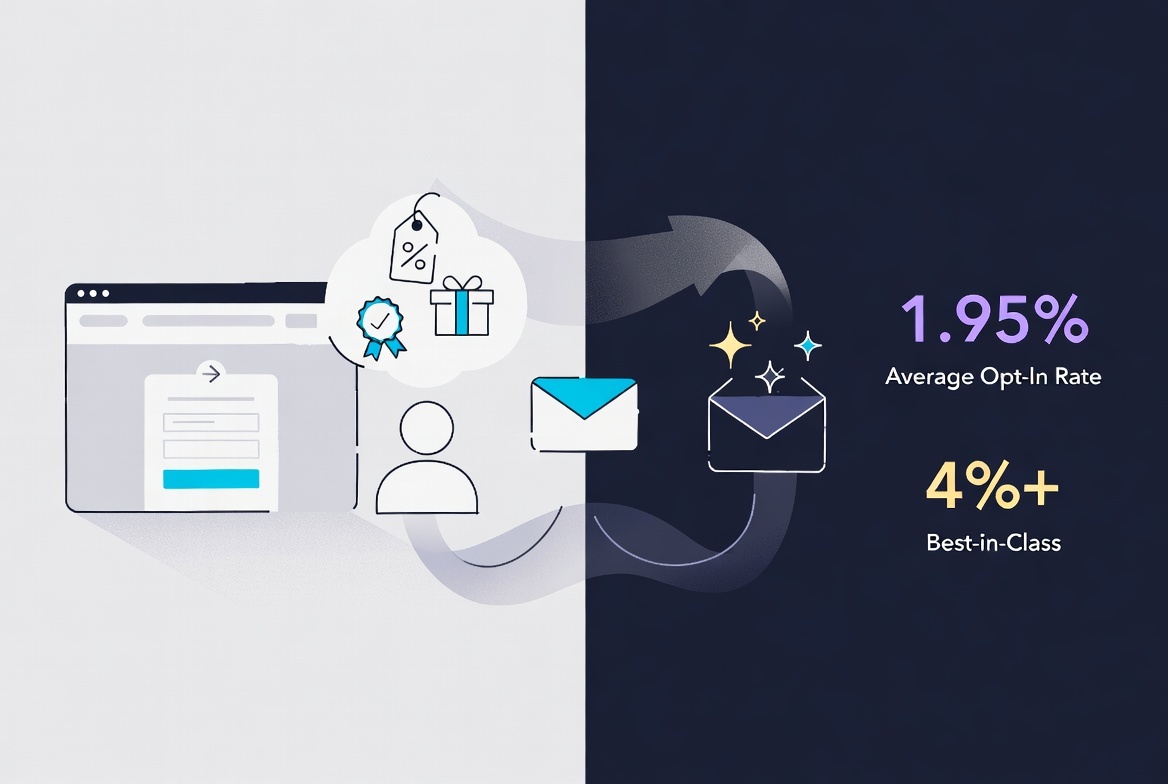
Landing Page with Email Capture: Create a simple website offering early access, exclusive launch offers, or insider updates. This list becomes your launch-day catalyst.
Beta Testing Program: Recruit engaged users to test pre-release versions. Beyond bug identification, beta testers become invested advocates who provide reviews and referrals at launch.
Stage 2: Launch Execution
Review Acquisition Strategy
App store ratings directly impact both visibility (algorithm ranking) and conversion (user decision-making). Research indicates that apps moving from 3 to 4 stars see up to 92% improvement in download conversion.
Timing Optimization: Prompt for reviews after positive experiences:
- Successful purchase completion
- First use of a popular feature
- Positive customer service interaction
Never interrupt negative experiences or ask before users have experienced value.
Response Management: Monitor and respond to reviews, particularly negative ones. Responsive engagement signals quality to potential users.
Multi-Channel Launch Campaign
Email Marketing:
- Launch announcement to pre-built list
- Onboarding sequence (Days 1, 3, 7) introducing features progressively
- App-exclusive offers to drive initial engagement
Social Media:
- Launch announcements with download links
- Contests and giveaways requiring app download
- User-generated content campaigns
QR Code Deployment: Enable frictionless download paths across:
- Website (desktop visitors scan to mobile)
- Physical retail locations (signage, receipts, packaging)
- Marketing materials and events
PR and Media:
- Press releases to relevant publications
- App review site submissions
- Product Hunt launch for visibility among early adopters
Partnership and Cross-Promotion
Identify complementary businesses for mutual promotion. A fashion app might partner with a beauty brand; a home goods app with an interior design service.
Effective partnerships provide access to aligned audiences through trusted channels.
Stage 3: Post-Launch Growth and Retention
The Retention Challenge
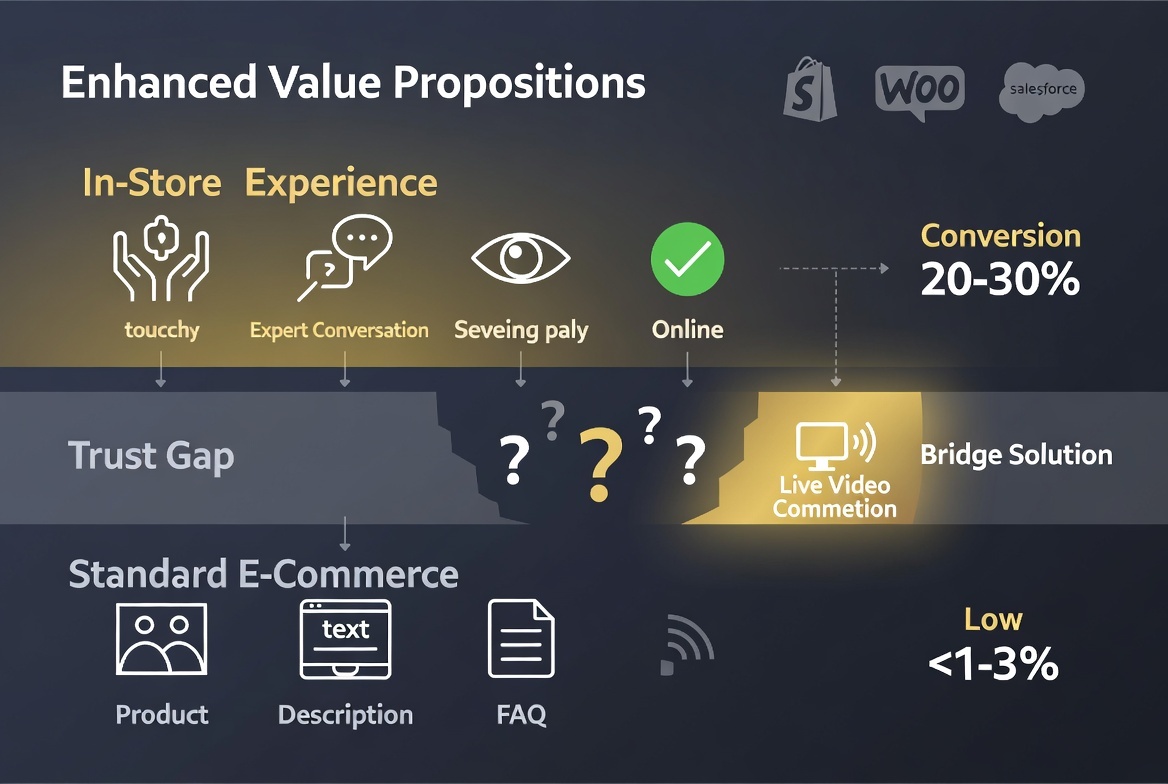
For e-commerce apps specifically, the retention challenge often stems from a fundamental problem: online shopping lacks the guidance customers receive in physical stores.
Customers browse product catalogs but can’t touch fabrics, see true colors, or ask questions. For high-consideration purchases — jewelry, furniture, electronics — this uncertainty creates abandonment.
Live Commerce as a Retention Strategy
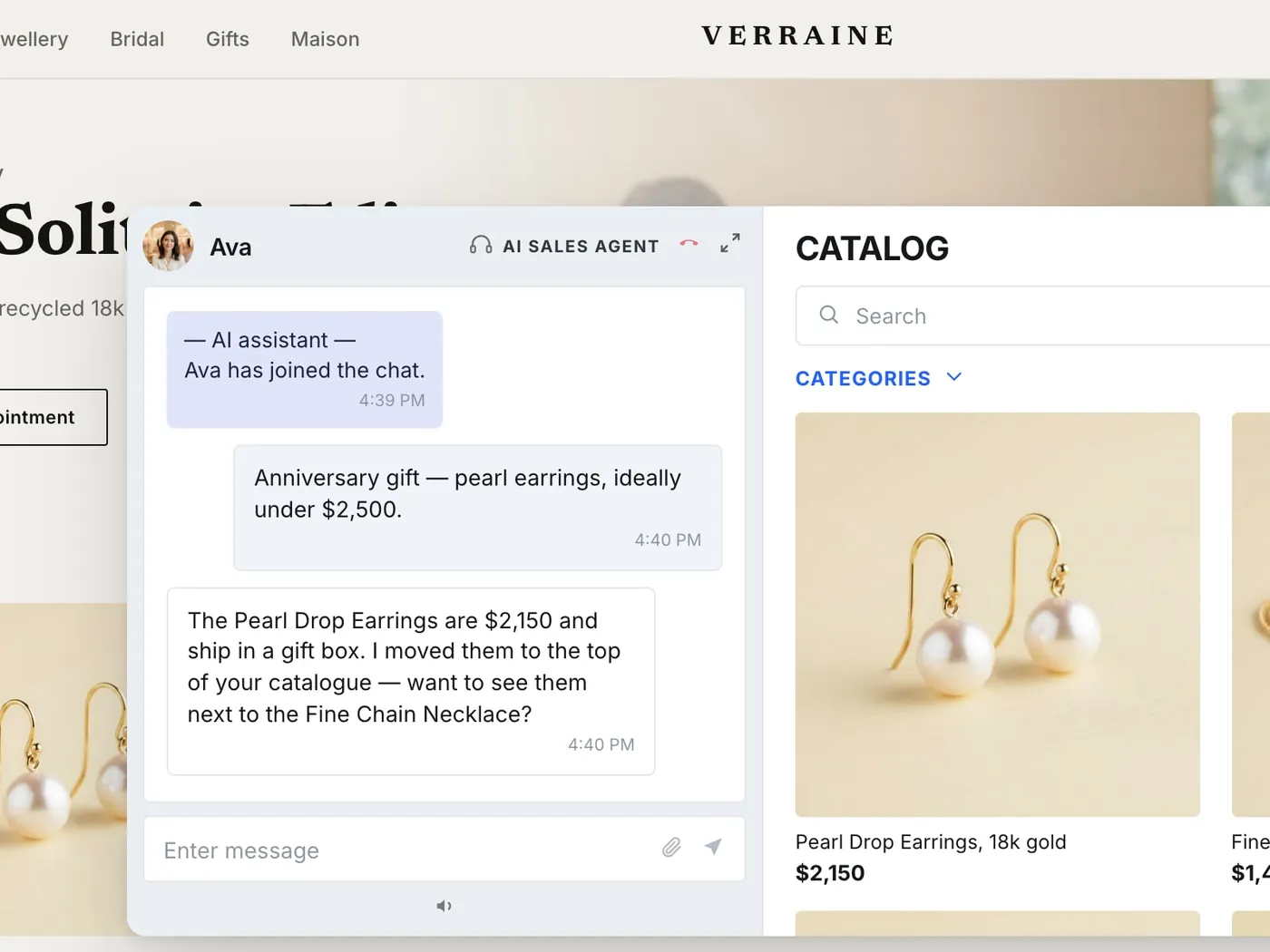
Live video commerce addresses this gap by connecting customers with product experts in real-time.
The Conversion Impact: When customers can see products demonstrated, ask questions, and receive personalized guidance, conversion rates approach in-store levels — far exceeding standard e-commerce.
The Retention Impact: Customers who have positive human interactions with a brand develop stronger loyalty. They return not just for products but for the experience.
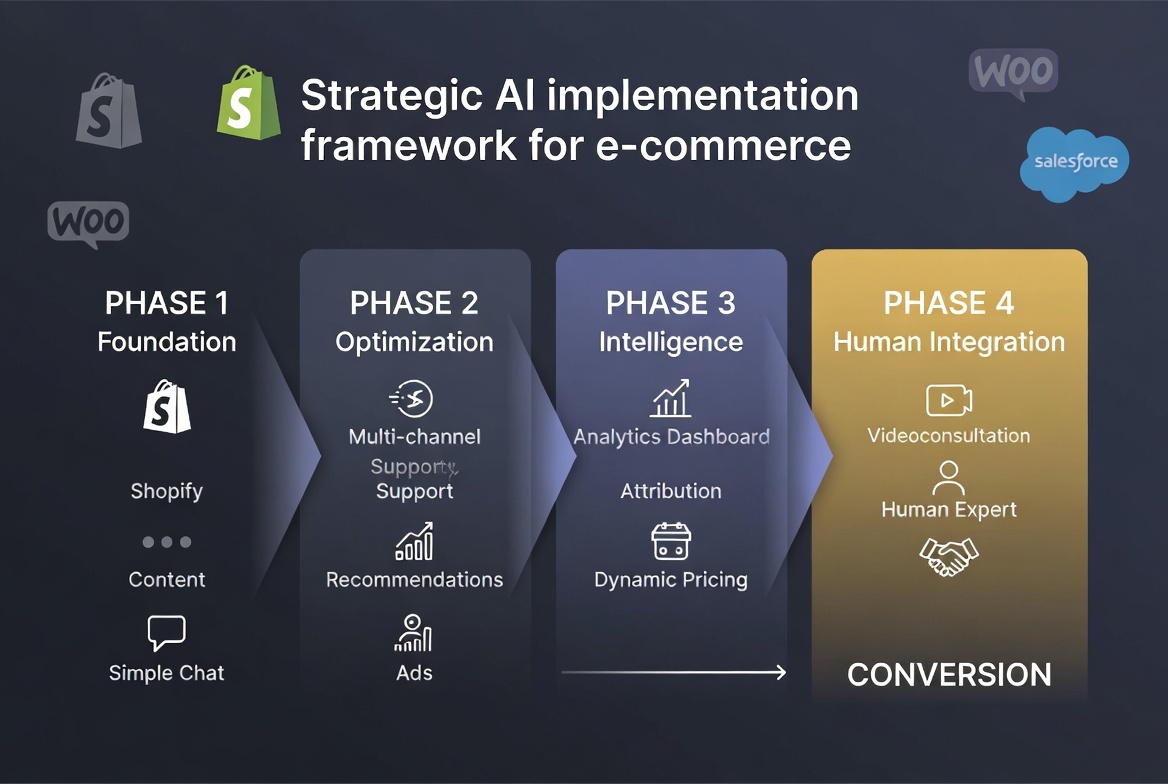
Implementation: Platforms like Immerss integrate with Shopify, WooCommerce, and Salesforce Commerce Cloud, enabling live video consultations within e-commerce apps. Customers tap to connect with experts who demonstrate products, answer questions, and guide purchase decisions.
For categories like jewelry, furniture, fashion, and electronics, this capability transforms the app from a catalog into a consultative shopping experience.
Loyalty and Engagement Programs
Rewards Structure: Design loyalty programs that incentivize both purchases and engagement:
- Points per purchase
- Bonuses for app-exclusive shopping
- Rewards for reviews and referrals
Gamification Elements: Streaks, badges, levels, and challenges increase habitual app usage.
Push Notification Strategy: Valuable, personalized notifications drive return visits:
- Price drops on viewed/wishlist items
- Back-in-stock alerts
- Exclusive flash sales
- Personalized recommendations
Avoid generic promotional blasts that train users to ignore or disable notifications.
App-Exclusive Value
Create compelling reasons to shop via app rather than website:
- Exclusive discounts (10-15% app-only)
- Early access to sales and new arrivals
- App-only products or collections
- Enhanced features (AR try-on, saved preferences)
This strategy drives downloads from existing customers while building the app as a preferred shopping channel.
Paid Acquisition at Scale
Apple Search Ads: Capture high-intent users searching for shopping apps or specific product categories. Bid on brand terms (defense) and category terms (acquisition).
Google App Campaigns: Universal App Campaigns automatically distribute across Search, YouTube, Play Store, and Display Network, optimizing for installs or in-app actions.
Retargeting: Re-engage users who:
- Visited website but didn’t download
- Installed but went inactive
- Browsed products without purchasing
Retargeting campaigns typically deliver lower CPI than cold acquisition.
Influencer Partnerships: Partner with influencers whose audiences match your target customers. Provide unique promo codes for tracking and incentive.
Metrics Framework
Acquisition Metrics
| Metric | Description | Target Benchmark |
|---|---|---|
| Cost Per Install (CPI) | Ad spend ÷ installs | Varies by category |
| Install Rate | App store views → installs | 25-35% |
| Organic vs. Paid Ratio | Balance of acquisition sources | 40%+ organic |
Engagement Metrics
| Metric | Description | Target Benchmark |
|---|---|---|
| Day 1 Retention | Users returning after 24 hours | 35-40% |
| Day 7 Retention | Users active after one week | 15-20% |
| Day 30 Retention | Users active after one month | 10-15% |
| Session Frequency | Average sessions per user/week | 2-3x |
Revenue Metrics
| Metric | Description | Target Benchmark |
|---|---|---|
| Conversion Rate | Users who purchase | 2-5% |
| Average Order Value | Revenue per transaction | Category dependent |
| Lifetime Value (LTV) | Total revenue per user | 3x+ CPI |
| LTV:CPI Ratio | Return on acquisition | 3:1 minimum |
Implementation Roadmap
Phase 1: Foundation (Months 1-2)
- Complete ASO optimization
- Build pre-launch landing page and email list
- Establish analytics and tracking infrastructure
- Develop launch content and assets
Phase 2: Launch (Month 3)
- Execute multi-channel launch campaign
- Implement review solicitation strategy
- Activate partnerships and PR
- Begin modest paid acquisition testing
Phase 3: Optimization (Months 4-6)
- Analyze retention data and identify drop-off points
- Implement live commerce for high-consideration categories
- Launch loyalty program
- Scale paid channels with proven ROI
Phase 4: Scale (Months 7+)
- Expand paid acquisition on validated channels
- Develop influencer partnership program
- Add app-exclusive features and value
- Continuous optimization based on metrics
Conclusion
Successful e-commerce app marketing requires strategic alignment across acquisition, conversion, and retention.
The apps that win don’t just drive downloads — they create compelling reasons to install, immediate value upon opening, and ongoing reasons to return.
For e-commerce specifically, addressing the confidence gap that causes purchase abandonment is essential. Live video commerce provides the human guidance that transforms browsers into buyers and one-time purchasers into loyal customers.
The framework presented here provides a roadmap. The execution requires consistent effort, measurement, and optimization.
Ready to add live video consultations to your e-commerce app? Schedule a Demo with Immerss