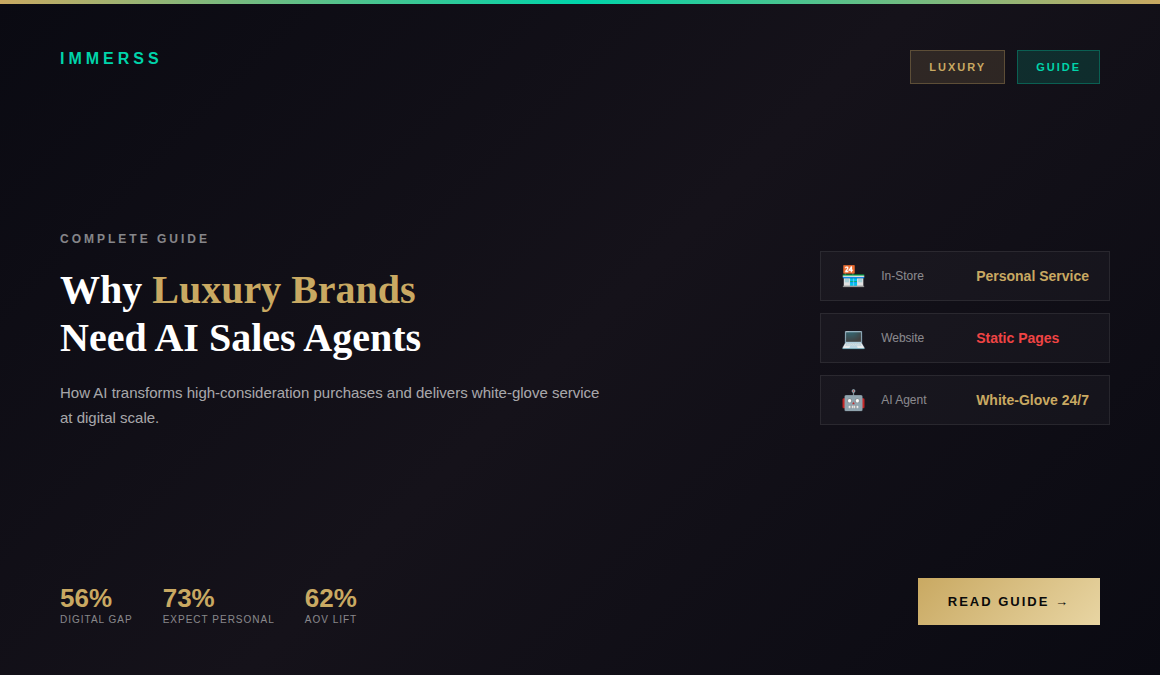

Why Luxury Brands Need AI Sales Agents: The Complete Guide
How AI transforms the high-consideration purchase journey and delivers white-glove service at digital scale.
Executive Summary
Luxury retail faces a fundamental challenge: the personalized, high-touch service that defines the in-store experience doesn’t translate to digital channels. This guide explores why luxury brands need AI Sales Agents more than any other category, how high-consideration purchases require guided selling, and what results leading brands are achieving. For the full playbook, see our complete guide to AI sales agents.
Key insights:
Luxury e-commerce conversion rates average just 0.9-1.5% — among the lowest in retail — because high-consideration purchases require guidance that traditional websites can’t provide. AI Sales Agents bridge this gap by delivering personalized, knowledgeable engagement to every visitor, 24/7. The result: dramatically higher conversion rates and Average Order Values that reflect the confidence of guided purchasing.
The Luxury Service Gap
Luxury brands built their reputations on exceptional personal service. The boutique experience — where a client advisor remembers your preferences, anticipates your needs, and makes you feel like the most important person in the room — is what separates luxury from everything else.
This experience doesn’t scale online.
BCG’s 2025 Luxury CX and AI Global Survey found that 56% of luxury consumers report their digital experience falls short of expectations. They expressed frustration with impersonal interactions, advisors who don’t know their preferences, and follow-up communications that feel generic rather than curated.
For brands built entirely on personalization, this gap is devastating. Every underwhelming digital interaction undermines the brand promise that took decades to establish.
The High-Consideration Purchase Challenge
Luxury purchases are almost always high-consideration. Customers aren’t making impulse buys — they’re making decisions that involve research, emotional investment, and significant financial commitment.
Consider the mindset of someone shopping for a $10,000 engagement ring, a $3,000 watch, or a $5,000 handbag. These purchases come with questions: Is this the right choice? Will it hold value? What makes it worth the premium? How do I know I’m getting authentic quality?
They also come with concerns: What if it doesn’t fit? What’s the return process for something this expensive? Can I trust an online purchase for something this important?
In physical stores, skilled sales associates address these questions and concerns in real time. They don’t wait for the customer to ask — they anticipate, guide, and reassure.
Online, customers face these doubts alone. And when doubts go unanswered, customers leave.
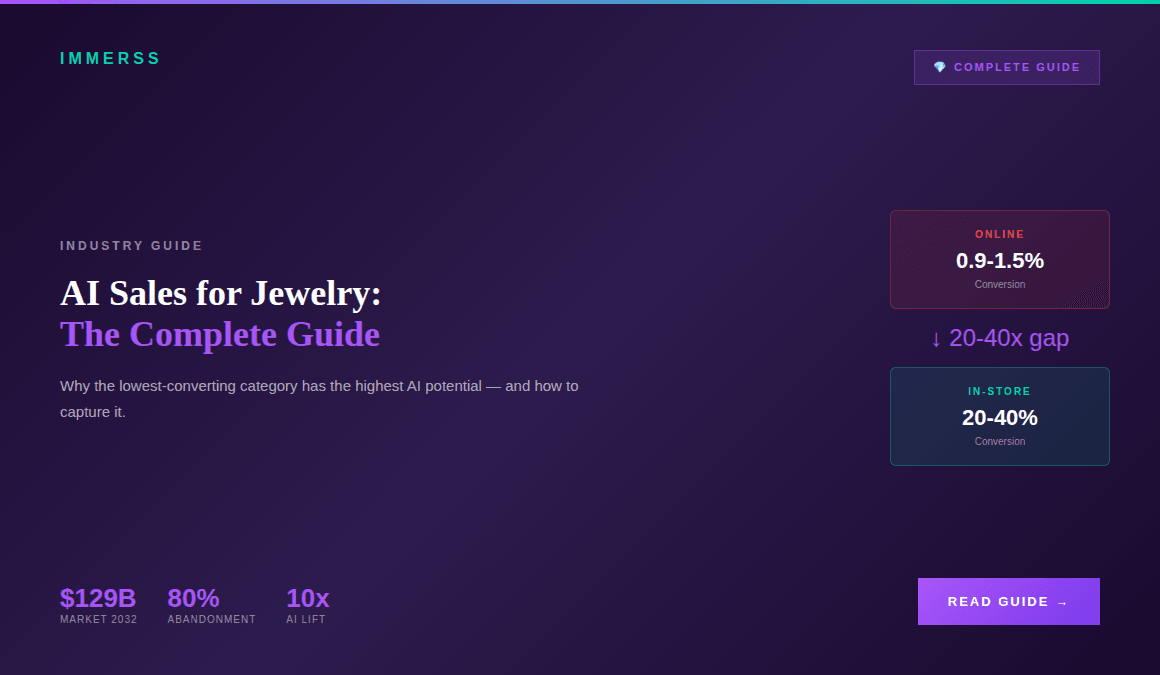
This is why luxury e-commerce conversion rates are among the lowest in retail. Jewelry and watches typically convert at less than 1%. Luxury fashion hovers around 1-1.5%. Even with strong traffic, most potential buyers walk away because no one was there to help them make a confident decision.
What Luxury Customers Expect
Research from Artefact reveals that 73% of luxury consumers expect hyper-personalized experiences — not “personalized” in the superficial sense of first-name emails, but genuinely tailored interactions that demonstrate the brand understands who they are.
Meanwhile, 90% of luxury consumers still prefer offline “touch and feel” experiences. But the reality of modern shopping is that research, browsing, and consideration happen online. Increasingly, final purchases do too — if the digital experience rises to the occasion.
The expectation is clear: luxury customers want the expertise and personal attention of in-store service delivered through digital convenience. Brands that achieve this will capture market share. Brands that fail will lose customers to competitors who meet them where they are.
How AI Sales Agents Transform Luxury E-Commerce
AI Sales Agents address the luxury service gap by providing personalized, knowledgeable engagement at scale.
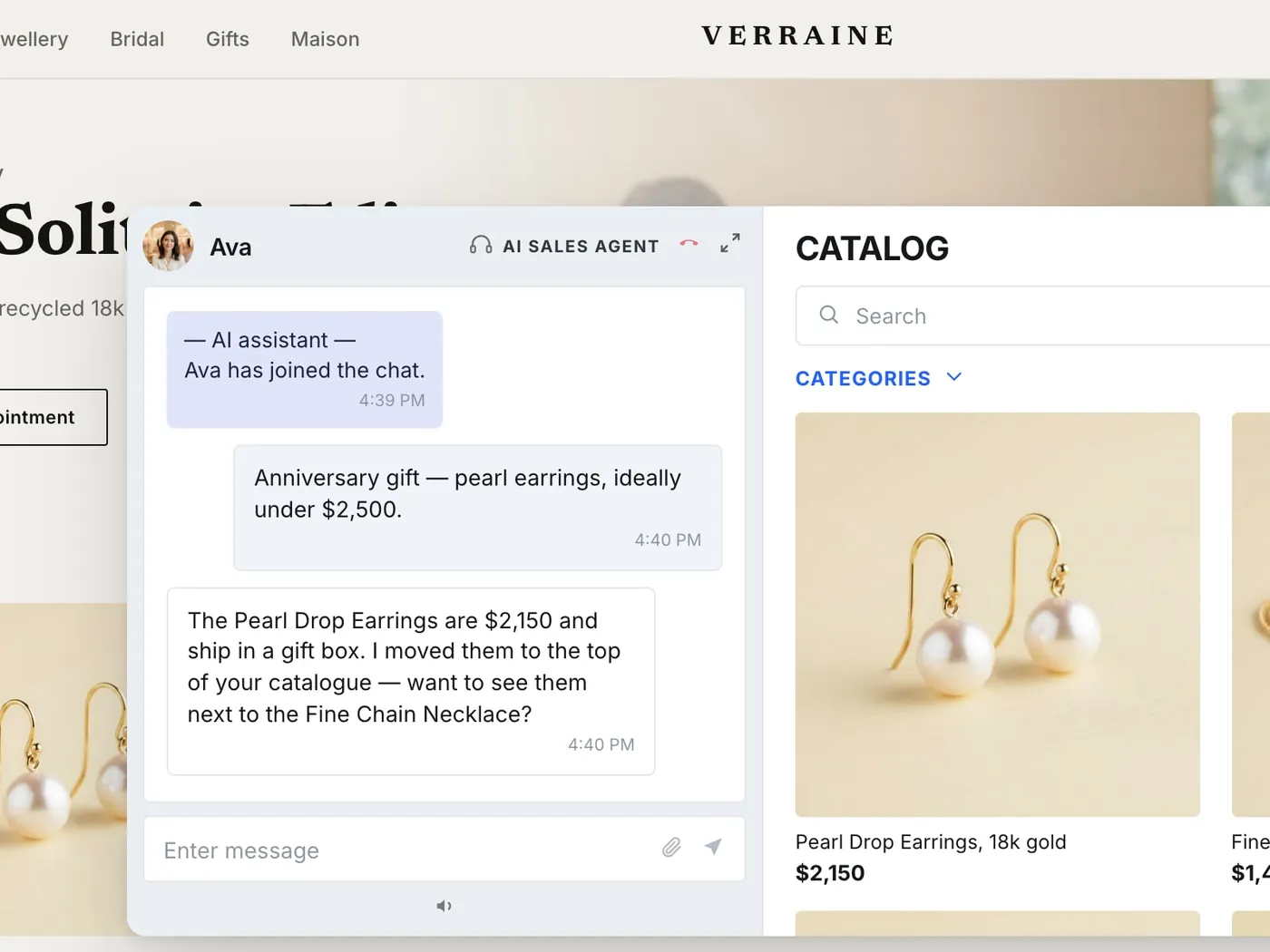
Proactive engagement instead of passive waiting. Traditional e-commerce waits for customers to seek help. AI Sales Agents initiate conversations based on behavior — noticing when someone lingers on a product, returns to compare options, or shows exit intent. This mirrors what great in-store salespeople do naturally.
Instant expertise instead of delayed responses. When customers have questions about materials, craftsmanship, sizing, or authenticity, AI provides immediate, knowledgeable answers. No contact forms, no 24-48 hour waits, no “let me check with someone.”
Personalized recommendations instead of generic suggestions. AI analyzes browsing behavior and stated preferences to recommend products that actually match the customer’s taste — the same way an experienced sales associate would after learning what a client likes.
Guided purchasing instead of abandoned browsing. Through the entire journey — from discovery to consideration to checkout — AI guides customers toward confident decisions, addressing objections and concerns in real time.
BCG describes this as creating “superhuman client advisors” — technology that extends human capabilities rather than replacing human touch. AI Sales Agents embody this vision by delivering white-glove service to every visitor, at every hour.
Why Luxury Sees Higher AI Impact
AI Sales Agents improve conversion across e-commerce categories, but the lift is significantly higher in luxury. Several factors explain this:
Guidance matters more for complex purchases. When customers are buying commodity products with low stakes, they don’t need much help. When they’re investing thousands of dollars in something meaningful, guidance becomes essential. AI fills this need at scale.
Questions and concerns are more prevalent. A $15 purchase generates few questions. A $1,500 purchase generates many. AI’s ability to answer questions instantly has more impact when there are more questions to answer.
Emotional confidence drives larger purchases. Luxury buying is emotional. Customers need to feel confident, valued, and reassured. AI provides this emotional support through attentive service and expertise.
Average Order Values are higher. When conversion lifts apply to $500+ transactions, the revenue impact is transformative. A 3x conversion improvement on high-ticket items changes business economics entirely.
Industry benchmarks show that jewelry and luxury fashion see the largest relative conversion gains among AI-engaged visitors — dramatically higher than in commodity categories. The higher the consideration level, the greater the AI impact.
The Lucchese Case Study
Lucchese, the heritage bootmaker known for handcrafted luxury footwear, demonstrates what AI can achieve in high-end retail.
After implementing Immerss AI Sales Agents, Lucchese saw meaningfully higher Average Order Values.
This lift came from AI doing what great salespeople do: recommending complementary products, explaining craftsmanship and heritage, and giving customers confidence to invest in higher-value purchases.
The AI didn’t just close sales — it elevated them. Customers who engaged with AI bought more, spent more, and left more confident in their decisions.
24/7 Service for a Global Customer Base
Luxury brands serve global clientele. A customer in Shanghai, Dubai, or São Paulo expects the same service experience as a customer in New York or Paris.
Traditional e-commerce fails here. When a client in Tokyo browses at 2 AM their time — the middle of a New York workday — they might reach a human. When they browse at 2 PM Tokyo time — the middle of the night in New York — they get a contact form.
This mismatch costs brands countless sales. Customers with intent, budget, and interest leave because no one was available to help.
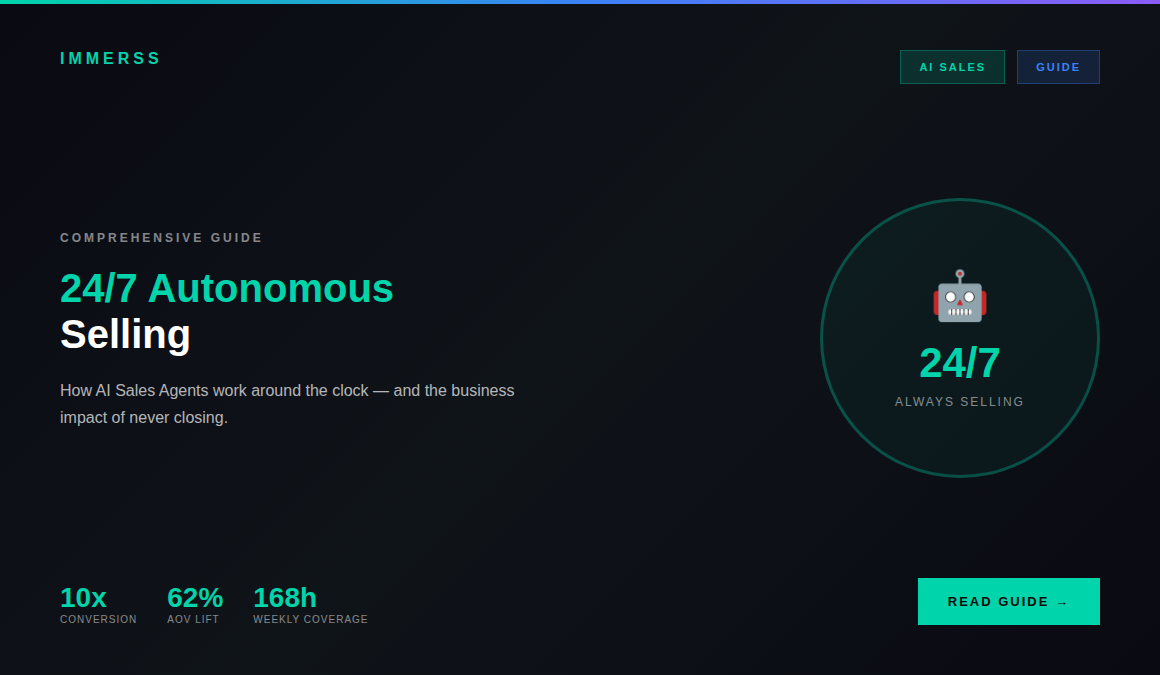
AI Sales Agents eliminate this problem. They provide consistent, knowledgeable service 24 hours a day, 7 days a week, across every time zone. The customer in Tokyo at 2 PM gets the same attentive experience as the customer in New York at noon.
Data shows that stores capture materially more leads during off-hours with AI Sales Agent coverage — leads that would otherwise disappear into abandoned browsing sessions.
Scaling White-Glove Service
The ultimate value of AI for luxury isn’t replacing human relationships — it’s extending them.
Luxury brands will always have VIP clients who receive direct attention from dedicated advisors. That won’t change. But what about the next tier of customers? The aspiring buyer researching their first significant purchase? The international client browsing from a distant time zone?
Historically, these customers received the standard website experience — static pages, generic chatbots, contact forms. They were left to figure things out alone, and most of them left without buying.
AI Sales Agents change this equation. They extend personalized service to every visitor, creating a path from casual browser to engaged customer to loyal client.
BCG frames this as “extending the experience of VVICs (very, very important clients) to VICs (very important clients).” In practice, it means treating every potential customer as important — because in luxury, they should be.
Implementation for Luxury Brands
For luxury brands considering AI Sales Agents, several factors ensure success:
Brand voice alignment. The AI must speak in the brand’s voice — whether that’s understated elegance, confident authority, or heritage craftsmanship. Immerss allows complete customization of tone, style, and communication approach.
Product knowledge depth. Luxury customers ask detailed questions about materials, craftsmanship, provenance, and care. The AI must be trained on comprehensive product information to answer with expertise.
Service philosophy integration. The AI should reflect the brand’s approach to customer relationships — knowing when to guide, when to step back, and when to offer escalation to human advisors for VIP situations.
Seamless escalation paths. For complex requests or high-value clients who prefer human interaction, AI should smoothly transition to human advisors without friction.
Immerss AI Sales Agents are designed specifically for this: high-touch, high-value retail where the experience matters as much as the product.
The Competitive Reality
The luxury market is shifting. Growth is slowing in many segments, competition is intensifying, and a new generation of consumers expects digital experiences to match or exceed in-store service.
Brands that solve the digital experience gap will capture market share. Brands that don’t will watch younger, digital-native customers choose competitors who meet them where they are.
According to Shopify data, 87% of retailers report that AI has had a positive revenue impact. For luxury brands — where the stakes are higher and the service expectations greater — AI isn’t just beneficial. It’s essential.
Conclusion
Luxury brands built their reputations on personal service. The challenge has always been delivering that service at scale, especially in digital channels where customers expect boutique-level attention but encounter generic experiences.
AI Sales Agents solve this challenge. They engage every visitor with personalized attention. They answer questions with product expertise. They guide high-consideration purchases through the journey from interest to confidence to purchase.
For luxury brands, the question isn’t whether to adopt AI Sales Agents. It’s how quickly they can implement them — before competitors capture the customers they’re losing today.