
Why Luxury B2B Retailers Are Switching to Livestream Shopping in 2026
The luxury retail landscape is undergoing a dramatic transformation. Traditional trade shows and in-person appointments, once the cornerstone of B2B jewelry and premium goods sales, are giving way to a more efficient, scalable solution: livestream shopping.
The shift is documented outside our own industry commentary. McKinsey’s B2B Pulse research reports that roughly two-thirds of B2B buyers now prefer remote interaction to in-person at many stages of the purchase, and that buyers routinely work across ten or more channels with a supplier where they once used five (McKinsey, B2B sales: Omnichannel everywhere, every time). Luxury wholesale is not exempt from that. For jewelry wholesalers and watch distributors, and luxury goods suppliers, the open question is no longer whether buyers will meet remotely — it is whether the remote meeting does justice to the product.
The Luxury B2B Challenge: Why Traditional Methods No Longer Work
The Cost of In-Person Sales
Consider the typical luxury B2B sales process:
- Sales representatives travel to client locations or trade shows
- Buyers fly to headquarters showrooms for seasonal previews
- Trade show booths cost $15,000-$50,000 per event
- Face-to-face appointments limit reach to 5-10 clients per day
The math is simple: A jewelry manufacturer spending $200,000 annually on trade shows and travel reaches perhaps 500-800 qualified buyers. That’s $250-$400 per buyer contact—before any sale is made.
The Premium Product Dilemma
Luxury products present unique challenges:
- Detail matters: A 2-carat diamond’s cut quality can’t be fully appreciated in photos
- Trust is essential: High-value purchases require relationship building
- Personalization is expected: Each buyer has specific needs and preferences
- Exclusivity is valued: Mass marketing feels wrong for premium goods
Static catalogs and recorded videos simply don’t capture the essence of luxury products or provide the personalized experience that B2B buyers expect.
Enter Livestream Shopping: The Perfect Solution for Luxury B2B
Livestream shopping bridges the gap between traditional in-person sales and digital efficiency. Here’s why it’s particularly powerful for luxury B2B:
1. Show Every Detail in Real-Time
Unlike photographs or pre-recorded videos, live streaming allows you to:
- Rotate products under different lighting conditions
- Zoom in on intricate details (stone clarity, metal craftsmanship, serial numbers)
- Demonstrate functionality (watch mechanisms, jewelry clasps, product durability)
- Compare pieces side-by-side in real-time
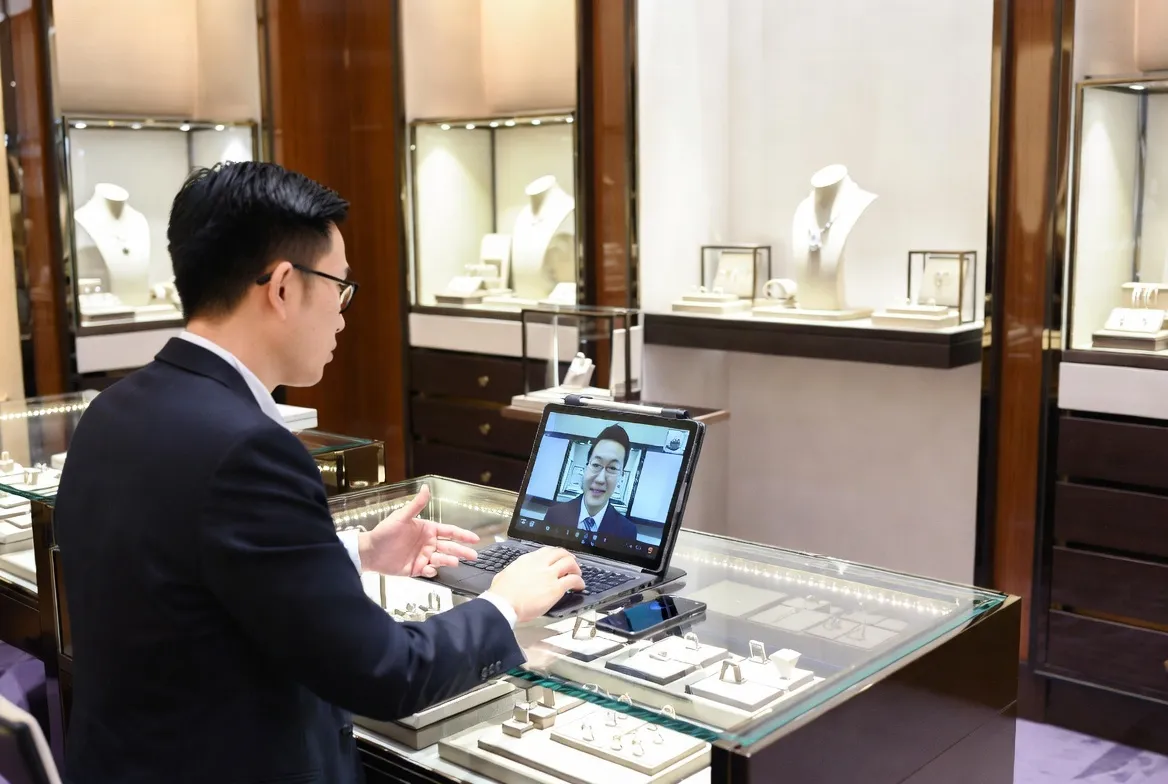
What that looks like in practice: a watch distributor showing a new collection to a few hundred international retailers at once, walking the movement under a macro lens and answering technical questions live. That is detail a lookbook photograph cannot carry, and detail a trade-show appointment can only give to the buyers who flew in.
2. Maintain the Personal Touch at Scale
Luxury sales are relationship-driven. Livestream shopping preserves this while expanding reach:
- One-to-one sessions for VIP clients with exclusive access
- Small group presentations for regional distributors (10-20 attendees)
- Large showcases for seasonal collections (100+ retailers)
- Interactive Q&A that feels like a personal consultation
You’re not sacrificing personalization for scale—you’re achieving both simultaneously.
3. Geographic Barriers Disappear
Your New York showroom can now serve:
- A boutique owner in Dubai at 9 AM their time
- A department store buyer in Tokyo at 3 PM their time
- A distributor in São Paulo at 11 AM their time
All in the same day, without anyone boarding a plane.
4. Reduce Costs While Increasing Reach
The arithmetic worth doing here is your own, and it takes ten minutes.
On one side, put what the selling calendar already costs: booth fees and build, freight and insurance, flights, hotels and per diems, showroom upkeep, and the days your senior people spend in transit. Divide that by the number of qualified buyers who actually saw the collection. That figure — cost per buyer contact — is the number to beat.
On the other side, put the livestream programme: your platform quote, a one-time production setup (camera, lighting, audio, a surface that looks like your brand), staff hours per event, and samples and shipping for the accounts that need to handle a piece.
Two lines move. Travel largely disappears. And the denominator is no longer capped by the size of the room: a showcase seen by four hundred buyers costs about what a showcase seen by forty costs.
(We are deliberately not publishing a cost-saving percentage here. The honest answer depends on your own trade-show calendar — ask us for a quote and run it against last year’s spend.)
How Luxury B2B Livestream Shopping Works
Let’s walk through what a typical luxury B2B livestream session looks like:
Pre-Event Phase (1-2 Weeks Before)
1. Curate the Collection Select 15-20 pieces that align with buyer interests. For a jewelry wholesaler, this might be:
- New season’s signature pieces (5-7 items)
- Best-sellers in new variations (3-5 items)
- Exclusive or limited editions (2-3 items)
- Custom options showcase (3-5 samples)
2. Invite Your Buyers
- Email invitations with calendar links
- Personalized messages for VIP accounts
- Social media teasers (LinkedIn, Instagram)
- Option for private one-on-one sessions after the main event
3. Prepare Your Setup
- High-quality 4K camera for detail capture
- Professional lighting to showcase products accurately
- Macro lens for close-up shots (essential for jewelry)
- Multiple angles/stations for efficient presentation
During the Event (45-90 minutes)
Opening (5-10 minutes)
- Welcome attendees by name as they join
- Quick overview of what will be shown
- Explanation of how to ask questions and place orders
Product Showcase (30-60 minutes) Show each piece with:
- Visual presentation: Multiple angles, close-ups on details
- Storytelling: Design inspiration, craftsmanship process, unique features
- Specifications: Materials, dimensions, variations available
- Business details: Wholesale pricing, minimum orders, delivery timelines
Interactive Elements Throughout:
- Live Q&A as questions come in
- Polls: “Which finish do you prefer—rose gold or white gold?”
- Requests: “Can you show that piece next to the earlier bracelet?”
Closing (10-15 minutes)
- Recap of key pieces
- Special offers for live attendees (e.g., “10% off orders placed within 48 hours”)
- Clear next steps for ordering
- Schedule follow-up sessions if needed
Post-Event Follow-Up
Immediate (Same Day):
- Send thank-you email with recording link
- Include high-res photos of featured pieces
- Product spec sheets and pricing
- Order form or direct sales contact
24-48 Hours:
- Personal follow-up with high-engagement attendees
- Answer any outstanding questions
- Process orders from the event
- Schedule one-on-one consultations for complex orders
Ongoing:
- Add attendees to exclusive mailing list
- Invite to future private showcases
- Send updates on new arrivals
- Build long-term relationships
What a Luxury B2B Livestream Programme Looks Like
(The three scenarios below are composites — they describe how brands in these categories put a livestream programme together, and they are illustrative rather than accounts of named clients. Immerss customer results are shared in a demo, with the name and the numbers attached.)
Scenario 1: Fine Jewelry Manufacturer
Company: Mid-sized jewelry manufacturer in Italy Challenge: Limited trade show reach (3 shows/year), high travel costs Solution: Monthly livestream showcases
What changes:
- The buyer list is no longer bounded by who attends three shows a year
- Orders tend to run larger, because the whole collection can be shown rather than what fits in a travelling case
- Cost per buyer contact falls sharply once the travel line comes out of it
- The showcase recording keeps working after the event, for buyers in the wrong time zone
Key success factor: ultra-high-definition macro cameras, showing diamond clarity and setting detail more clearly than a buyer would see across a table.
Scenario 2: Luxury Watch Distributor
Company: Swiss watch distributor serving 250 authorized retailers Challenge: New collection launches required expensive regional meetings Solution: Tiered livestream strategy (VIP private sessions + regional group showcases)
What changes:
- Attendance climbs, because attending costs a retailer an hour rather than a flight
- Pre-orders open earlier and close faster than a regional launch tour allows
- The launch-tour event budget is largely avoided
- Weeks come out of time-to-market
Key success factor: exclusive early access for top-tier accounts through private one-to-one livestreams before the main event.
Scenario 3: Designer Handbag Wholesaler
Company: European luxury handbag brand Challenge: Expanding to Asian markets without physical presence Solution: Geo-targeted livestreams in local time zones with multilingual hosts
What changes:
- New markets can be tested before committing to a showroom or a local rep
- Retail partnerships open in territories with no physical presence at all
- Initial order sizes hold up, because the collection is shown properly rather than sent as a PDF
- No showroom capital is at risk while the market is still unproven
Key success factor: local co-hosts — industry experts or established buyers — lending credibility in a market where the brand has none yet.
Essential Features for Luxury B2B Livestream Shopping
Not all livestream platforms are created equal. Here’s what luxury B2B retailers need:
Must-Have Features
1. Superior Video Quality
- Minimum 1080p, preferably 4K resolution
- High frame rate for smooth product rotation
- Color accuracy for metals and gemstones
- Zoom capability without quality loss
2. Private Session Options
- Password-protected broadcasts
- Invitation-only access
- VIP one-on-one rooms
- Replay restrictions for exclusivity
3. E-commerce Integration
- Real-time inventory display
- Wholesale pricing tiers
- Bulk order functionality
- Custom payment terms (Net 30, credit lines)
4. Professional Branding
- White-label solution
- Custom overlays and graphics
- Branded player for website embedding
- No platform watermarks
5. Interactive Tools
- Live chat with moderation
- Q&A queue management
- Product tagging and links
- Virtual raise-hand for priority questions
6. Analytics and CRM
- Viewer engagement tracking
- Watch time by product
- Lead scoring integration
- Automated follow-up triggers
7. Geographic Flexibility
- Multi-timezone scheduling
- Geotagging for regional targeting
- Multi-language support
- International payment processing
Nice-to-Have Features
- AI-powered product recommendations based on viewer behavior
- Virtual try-on capabilities (for jewelry, watches)
- 3D product visualization
- Breakout rooms for side conversations
- Recording editing tools for on-demand content
- Integration with existing CRM (Salesforce, HubSpot)
Best Practices for Luxury B2B Livestream Success
Before You Start
1. Invest in Quality Equipment Don’t skimp on production quality. Luxury buyers expect a premium experience.
Minimum Setup ($3,000-5,000):
- Professional 4K camera (Sony A7 series or similar)
- Ring light or softbox lighting kit
- Lapel microphone
- Stable internet connection (50+ Mbps upload)
Professional Setup ($10,000-15,000):
- Multiple camera angles with switcher
- Professional lighting rig
- Studio backdrop with branding
- Macro lens for extreme close-ups
- Dedicated streaming computer
2. Train Your Team Your hosts are the face of your brand. They need to:
- Know products inside and out
- Be comfortable on camera
- Handle live questions gracefully
- Understand luxury sales psychology
- Project confidence and expertise
3. Test Everything Run private test streams before going live:
- Check lighting from all angles
- Test audio clarity
- Verify internet stability
- Practice product transitions
- Time your presentation
During Your Streams
1. Start Strong The first 2 minutes determine whether viewers stay or leave:
- Greet early arrivals warmly
- State clear value proposition
- Show a stunning piece immediately
- Set expectations for timing and interaction
2. Maintain Energy and Pace
- Switch between products every 3-5 minutes
- Vary between close-ups and wide shots
- Engage with chat constantly
- Keep your voice animated and enthusiastic
- Have a co-host to maintain dynamic conversation
3. Handle Objections Professionally When buyers raise concerns about:
- Pricing: “I understand budget is important. Let’s discuss volume discounts offline.”
- Minimum orders: “We have flexibility for established accounts. Let’s talk after the stream.”
- Delivery timelines: “I’ll check with fulfillment and get back to you within an hour.”
4. Create Urgency (Tactfully) Luxury buyers aren’t impulse shoppers, but gentle urgency works:
- “We have limited quantities of this exclusive piece”
- “Pre-order pricing available only to today’s attendees”
- “First 10 orders receive priority shipping”
Avoid aggressive tactics that cheapen the brand.
After Your Streams
1. Follow Up Promptly
- High-interest leads: Call within 24 hours
- All attendees: Email within 24 hours
- Non-attendees: Send recording and key highlights
2. Analyze and Improve Review metrics after each stream:
- Which products got the most questions?
- Where did viewers drop off?
- What was the conversion rate?
- Which marketing channels drove attendance?
3. Build Long-Term Relationships Don’t treat livestreams as one-off events:
- Create regular schedule (monthly/quarterly)
- Offer exclusive early access to loyal buyers
- Build a community of engaged retailers
- Gather feedback for continuous improvement
Overcoming Common Concerns
”Our products need to be touched and felt”
Reality: While tactile experience is valuable, most B2B buyers make decisions based on visual inspection, specifications, and trust in the supplier. Livestreaming excels at all three.
Solution: Ship sample pieces to top accounts before major launches. Use livestream to showcase the full collection, then arrange follow-up for specific tactile evaluation if needed.
”Our buyers are traditional and resistant to change”
Reality: the move to remote and digital buying is documented across B2B generally, not confined to younger buyers — McKinsey’s B2B Pulse work puts it at roughly two-thirds of buyers preferring remote interaction at many stages of the purchase. Even traditional buyers appreciate efficiency when the experience is premium.
Solution: Start with a hybrid approach. Offer both in-person appointments AND livestream options. Most buyers will naturally gravitate to digital once they experience the convenience.
”We’ll lose the exclusivity of our brand”
Reality: Exclusivity comes from product quality and customer experience, not sales channel. Password-protected, invitation-only streams are more exclusive than public trade show floors.
Solution: Design your streams to feel like VIP experiences. Limit attendees, use premium production quality, offer exclusive access to new collections.
”The technology is too complex”
Reality: Modern platforms are designed for non-technical users. If you can use Zoom, you can livestream.
Solution: Choose a platform with strong onboarding support. Many offer done-for-you setup and training. After 2-3 streams, it becomes routine.
The Business Case: The Model, Not a Headline Number
There is no honest single ROI figure for this. It turns on your average order value, how many buyers you can get into a showcase, and what the selling calendar costs you today — three things that differ by an order of magnitude between a jewelry manufacturer and a watch distributor. So here is the model to run, rather than a number to quote.
What goes in
- Platform subscription — your quote, not a published tier
- Equipment and production setup, largely one-time
- Training
- Staff time per event: preparation, the event itself, the follow-up
- Promotion, samples, and shipping to the accounts that need to handle a piece
What comes back
- Orders from showcases: showcases per year × attendees per showcase × the share that order × your average order value. The two numbers to be honest about are attendance and the ordering share; take both from your first quarter rather than from a vendor deck.
- Selling costs you stop committing: the shows you drop, and the travel behind them.
- Effects that are real but awkward to price: pre-orders that open earlier, buyers in markets where you have no rep, and a recording that keeps selling to the time zones that missed the live event.
(Every figure you plug in is yours, not an Immerss benchmark — we do not publish an ROI multiple. Run the model against last year’s trade-show budget, then against a pilot quarter before you commit a year to it.)
Getting Started: Your 30-Day Launch Plan
Week 1: Foundation
- Research and select livestream platform
- Audit existing equipment (camera, lighting, audio)
- Identify 3-5 product collections for first showcase
- Choose your host/presenter
Week 2: Setup
- Order any missing equipment
- Set up platform account and configure branding
- Create your streaming space/studio
- Conduct first practice stream (internal only)
Week 3: Content & Marketing
- Develop presentation script for first showcase
- Create invitation design and copy
- Build email list of target buyers
- Design post-event follow-up sequence
Week 4: Launch
- Send invitations (10-14 days before event)
- Final rehearsal and technical check
- Conduct your first livestream showcase
- Execute follow-up plan
- Analyze results and plan improvements
The Future: What’s Next for Luxury B2B Livestreaming
The technology and adoption are only accelerating. Here’s what’s coming:
AI Integration (already shipping)
- Personalized product recommendations during streams
- Real-time translation for multilingual audiences
- Automated highlight reels for on-demand viewing
- Predictive analytics for inventory planning
AR/VR Experiences (2027)
- Virtual showroom tours
- 3D product visualization
- Digital try-on for jewelry and watches
- Immersive brand experiences
Blockchain & Digital Assets (2027+)
- NFT certificates of authenticity during live reveals
- Smart contract order execution
- Transparent supply chain showcases
- Digital twin products
Hyper-Personalization (Ongoing)
- AI-curated individual showcases
- Dynamic pricing based on buyer history
- Predictive inventory for specific accounts
- Automated relationship nurturing
Conclusion: The Time to Act Is Now
The luxury B2B landscape has fundamentally changed. Buyers expect digital convenience without sacrificing the premium experience they value. Livestream shopping delivers both.
The companies adopting this technology now are:
- Taking cost out of the selling calendar rather than bolting a channel on top of it
- Reaching buyers in markets where they have no rep and no showroom
- Winning on the strength of a product shown properly, rather than on discounting
- Building relationships with buyers who would rather meet on video than fly
Meanwhile, those clinging to traditional methods are:
- Losing market share to digital-first competitors
- Missing opportunities in new geographic markets
- Paying exponentially more for each customer interaction
- Struggling to attract younger buyers who expect digital options
The question isn’t whether to adopt livestream shopping—it’s whether you’ll be an early adopter who captures market share, or a late follower playing catch-up.
The technology is mature. The buyers have already moved. The only open question is who shows them the collection first.
What are you waiting for?
Article by the Immerss Team | Published October 2025 · Updated September 2026